

You were trying to be healthy.
You brushed hard.
You brushed often.
You wanted your teeth to feel extra clean.
And now?
Your gums look lower.
Your teeth look longer.
Cold water makes you wince.
And a tiny voice in your head is asking:
Did I do this?
If aggressive brushing caused your gum recession… can you reverse it?
Here in Riverside, we see many patients who were simply trying to keep their teeth extra clean — only to discover they may have been brushing a little too hard.
Let’s talk about the honest answer.
First: What Actually Happened?
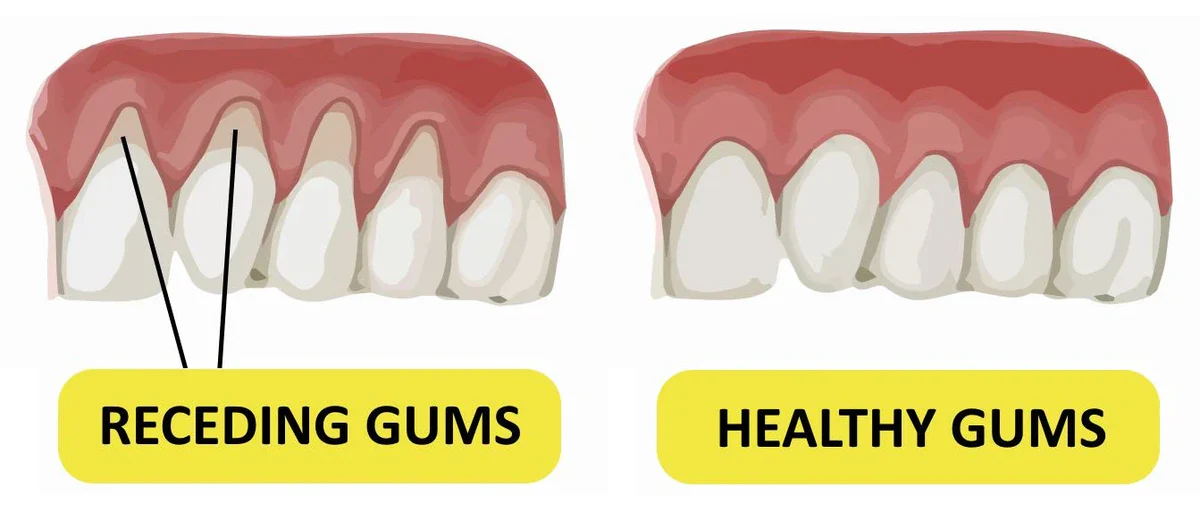
Your gums are not made of armor.
They’re soft, delicate tissue that protect the roots of your teeth. When you brush too hard — especially with a hard-bristled toothbrush — you slowly wear the gum tissue down.
It doesn’t happen overnight.
It happens one brushing at a time.
Picture scrubbing a countertop with a stiff brush every day for years. Eventually, the surface starts to wear down.
Your gumline works the same way.
When gums move downward (or upward on upper teeth), the root of the tooth becomes exposed. That’s called gum recession.
And once gum tissue pulls away…
It does not grow back on its own.
I know. That’s the part no one wants to hear.
So… Is It Permanent?
Here’s the simple truth:
Mild recession can be stabilized.
But lost gum tissue does not naturally regrow.
Your body is amazing. It can heal cuts. It can repair bone. It can fight infection.
But gum tissue doesn’t regenerate the way skin does.
However — and this is important — just because you can’t grow it back naturally doesn’t mean you’re stuck or doomed.
There are things you can do.
Step One: Stop the Damage Immediately

If aggressive brushing caused the problem, the first goal is to stop making it worse.
Here’s what to do right now:
- Switch to a soft-bristled toothbrush
- Use gentle pressure (think “massage,” not “scrub”)
- Hold the brush at a 45-degree angle to the gumline
- Use small circular motions
- Consider an electric toothbrush with a pressure sensor
If your toothbrush bristles look bent outward after a few weeks…
You’re brushing too hard.
Brushing harder does not mean cleaner.
Plaque is soft. It does not require force.
But Can Gentle Brushing Build the Gumline Back?
This is a common hope.
If brushing too hard pushed the gums down…
Will brushing gently push them back up?
Unfortunately, no.
Gentle brushing protects what you have left. It does not rebuild lost tissue.
Think of it like this:
If you wear down the grass in one patch of your lawn, walking gently over it won’t make the grass grow back. But it will stop further damage.
The same principle applies here.
What If It’s Only Slight Recession?
If your gum recession is mild, this is good news.
Early gum recession can often be stopped before it gets worse. But you have to act quickly.
Once gums begin to pull away from the tooth, they do not grow back on their own. However, you can prevent more damage and protect the teeth you have.
Here’s how early gum recession is usually treated:
Professional Deep Cleaning (Scaling and Root Planing)
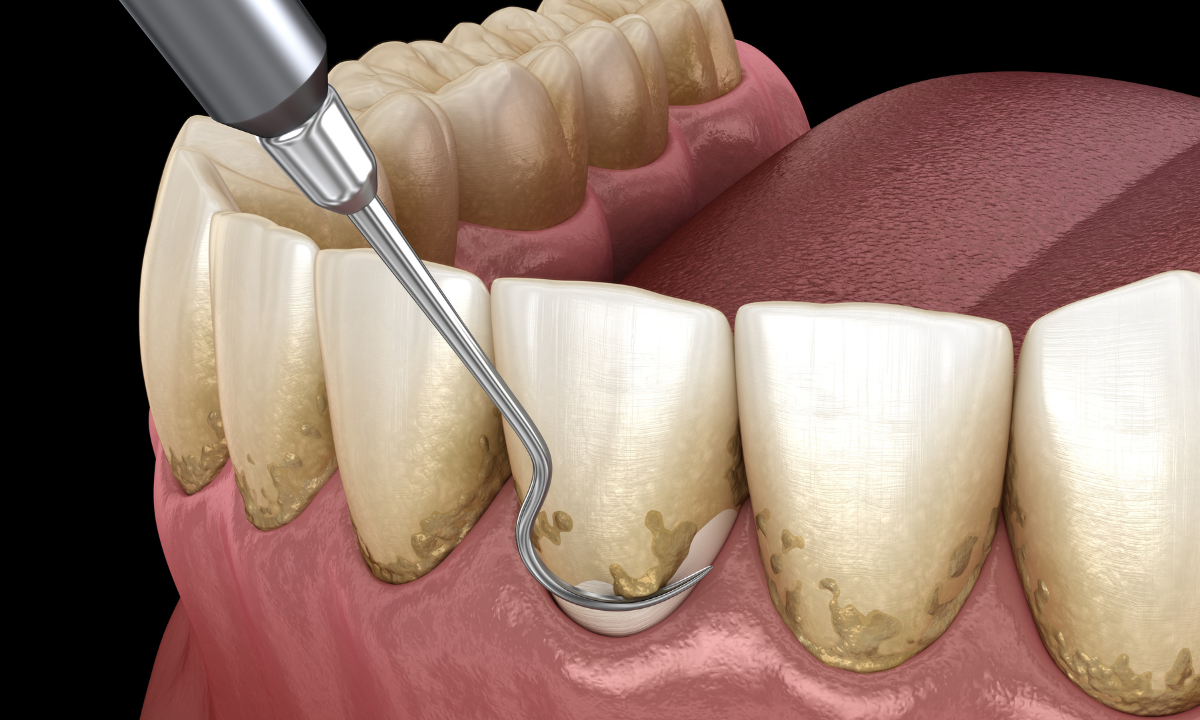
If plaque and tartar have built up below the gumline, your dentist may recommend a special type of deep cleaning called scaling and root planing.
This treatment does two important things:
- It removes plaque and hardened tartar from below the gumline.
- It smooths the root surface so the gums can reattach more tightly to the tooth.
When harmful bacteria are removed, the gums can calm down. Swelling goes down. Inflammation improves. And in many cases, the gum tissue can tighten and become healthier.
This does not mean the gums grow back to where they once were.
But it can stop the recession from getting worse.
And that’s powerful.
Why Acting Early Matters
When gum recession is caught early:
- Sensitivity can improve
- The gum tissue can stabilize
- The risk of root decay goes down
- Future procedures may be avoided
Waiting too long allows more tissue to be lost.
Acting early protects your smile.
Mild gum recession does not mean you’re headed for surgery. Many patients simply need professional care, better brushing habits, and regular monitoring.
The key is not ignoring it.
Because the sooner you address gum recession, the easier it is to manage.
What About Sensitivity?
When gums recede, the root of the tooth becomes exposed.
Roots don’t have enamel.
That’s why cold drinks suddenly hurt.
The good news? Sensitivity can often be reduced.
Dentists may recommend:
- Prescription-strength desensitizing toothpaste
- Fluoride treatments
- Bonding to cover exposed root surfaces
Many patients feel much better once the root is protected.
When Is Gum Grafting Needed?
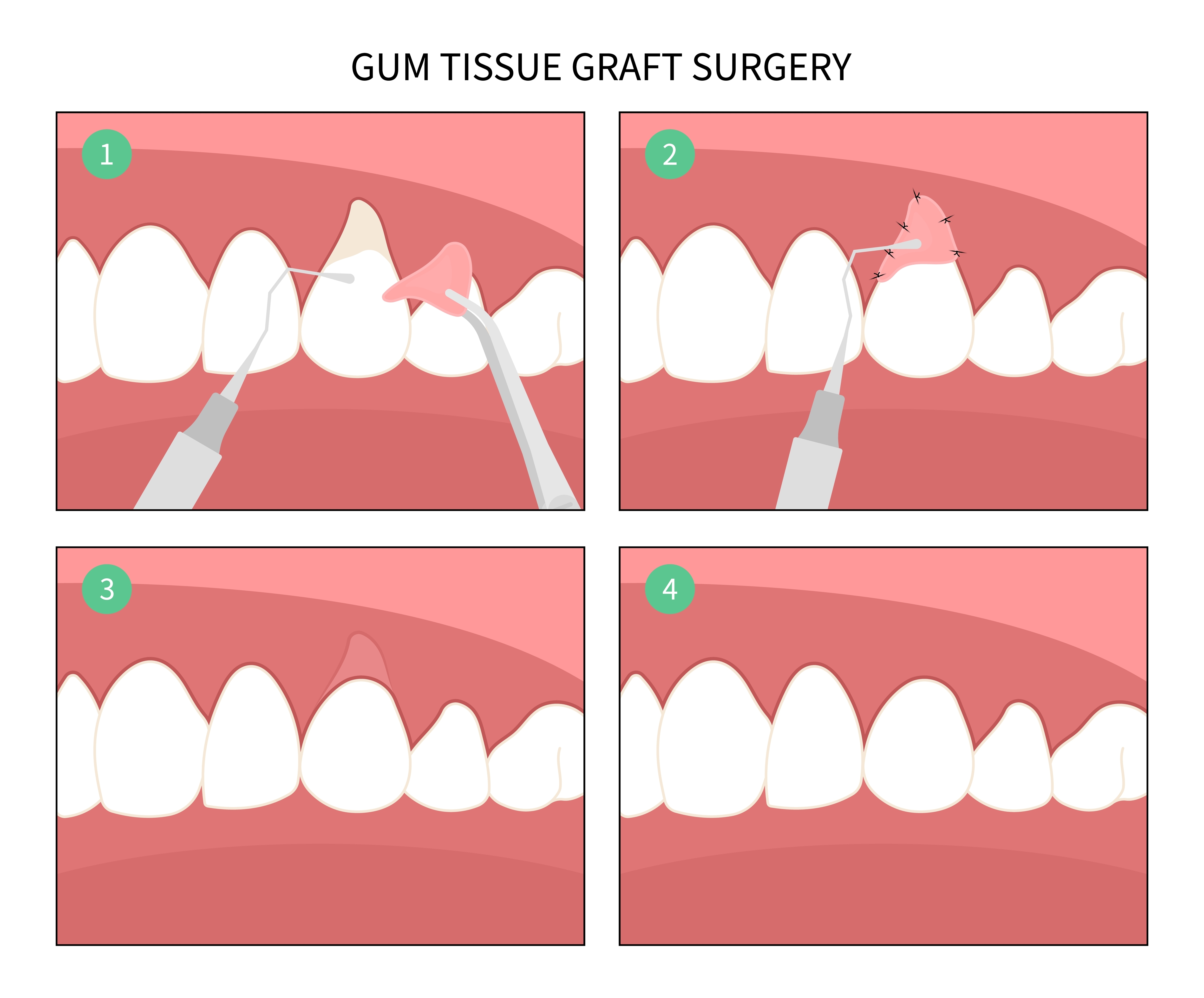
If recession is advanced, causing:
- Severe sensitivity
- Risk of root decay
- Aesthetic concerns
- Continued tissue loss
A gum graft may be recommended.
A gum graft is a procedure where tissue is placed over the exposed root to rebuild the gumline.
It sounds intimidating.
But modern techniques are very predictable and often much more comfortable than people expect.
And for the right patient, it can dramatically improve both comfort and appearance.
The Bigger Question: Why Did This Happen?
Aggressive brushing is one cause.
But it’s not the only one.
Other contributors include:
- Thin natural gum tissue
- Teeth that are slightly out of alignment
- Clenching or grinding
- Periodontal disease
- Tobacco use
Sometimes patients blame themselves when the full picture is more complex.
That’s why a proper dental exam matters.
You want to know the true cause — not just guess.
The Most Important Thing to Remember
Gum recession does not mean you failed.
In fact, it often happens to people who care the most about their oral hygiene.
They brush often.
They brush thoroughly.
They just use too much force.
You were trying to do the right thing.
Now it’s just about adjusting your technique.
Can You Reverse It Naturally?
Let’s answer clearly:
No, gum tissue that has receded does not naturally grow back.
But you can:
- Stop it from getting worse
- Reduce sensitivity
- Strengthen the remaining tissue
- Improve appearance with professional treatment if needed
And many people live comfortably for years after making small changes.
What Should You Do Next?
If you’ve noticed:
- Teeth looking longer
- Notches near the gumline
- New sensitivity
- Gums that seem uneven
Don’t panic.
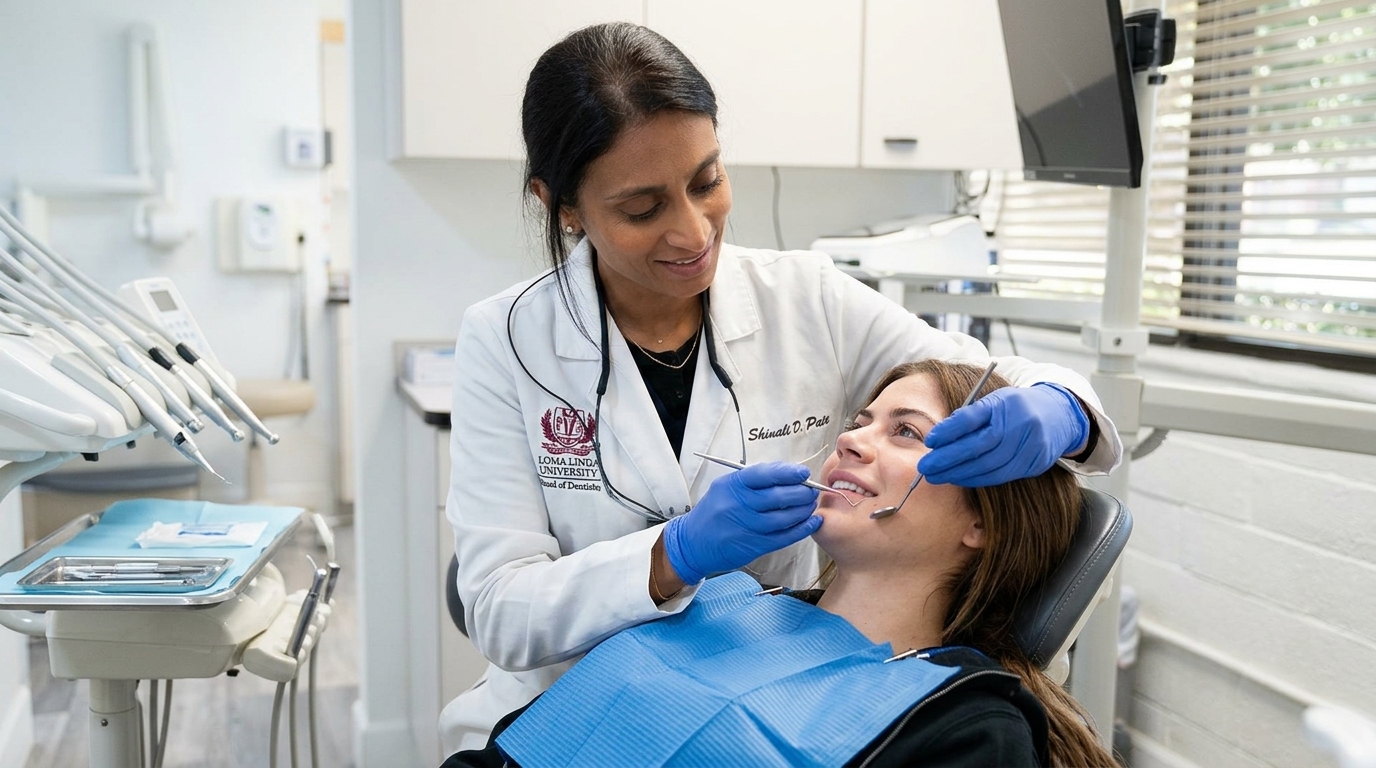
Schedule a professional evaluation.
The earlier recession is addressed, the easier it is to manage.
In many cases, simple changes are enough.
And if treatment is needed, it’s better to act early than wait.
One Last Thought
Your gums are not supposed to fight your toothbrush.
They’re supposed to be supported by it.
Think gentle. Think consistent. Think protective.
Healthy brushing feels controlled — not aggressive.
If you’re unsure whether your brushing habits are helping or harming your gums, a quick dental visit can give you clarity and peace of mind.
Because your goal isn’t just clean teeth.
It’s strong, stable gums that last a lifetime.
Worried About Gum Recession? Let’s Take a Look.
If you think aggressive brushing may have caused your gum recession, the best next step is simple:
Get clarity.
A gentle, professional exam can determine:
- How advanced the recession is
- Whether it’s stable or still progressing
- If simple changes are enough
- Or if treatment would truly benefit you
You don’t have to guess. And you definitely don’t have to figure this out alone.
If you’re in the Riverside area, call (951) 353-8454 to schedule your visit.
Or use the contact form on our website to request an appointment at a time that works for you.
The earlier you address gum recession, the easier it is to protect your smile for the long run.
Let’s make sure your brushing routine is helping your gums — not hurting them.



.jpeg)